Ingredients & Evidence
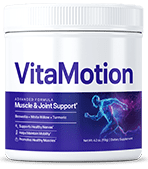
VitaMotion Ingredients: What's Really Inside?

VitaMotion earns real credit for transparency: it prints its full Supplement Facts panel, every ingredient with its exact dose. That makes it easy to do the honest thing and check each one against the research. The short version: the muscle-and-nerve nutrients are genuinely well dosed, and the anti-inflammatory botanicals are sensibly chosen if a little light.

The well-dosed core: muscle & nerve nutrients
Magnesium (as magnesium glycinate), 250 mg. The standout. Magnesium is central to muscle relaxation and nerve function, a large share of adults under-consume it, and the glycinate form here is well absorbed and gentle on the stomach. At 250 mg this is a genuinely useful, study-relevant dose, and it's the ingredient most likely to make a felt difference.
Vitamin D3, 20 mcg (800 IU). Low vitamin D is common and is associated with back and musculoskeletal pain; 800 IU is a sensible daily maintenance dose, especially if you don't get much sun.
B vitamins, B1 50 mg, B6 25 mg, B12 500 mcg. This B-complex targets nerve health, signal conduction, and nerve regeneration. The doses are generous (well above daily minimums), which is typical for nerve-support formulas. B6 is the one to keep an eye on long-term at very high intakes, but 25 mg is within a commonly used range.
The anti-inflammatory botanicals
Boswellia serrata, 100 mg (standardized to 30% AKBA). A highlight among the herbs. Boswellia is one of the better-researched botanicals for joint comfort, and crucially this one is properly standardized to 30% AKBA (its key active), so the 100 mg is meaningful rather than just filler.
Turmeric, 500 mg root powder + 10 mg of 95% curcumin extract, with BioPerine. Curcumin is well studied for inflammation, but it's poorly absorbed, which is why pairing it with BioPerine (black pepper) is the right move. The honest read: the standardized extract here is small (10 mg), so the active curcumin dose is light next to the ~1,000 mg used in the strongest studies; the 500 mg of whole-root powder adds supporting compounds.
Ginger, 200 mg root powder + 10 mg extract. A reasonable anti-inflammatory addition with some joint research; a supportive, not heavy-hitting, dose.
White willow bark, 120 mg (standardized to 15% salicin). The original "natural aspirin." At 15% salicin that's roughly 18 mg of salicin, which is lighter than the amounts used in pain trials, so think of it as gentle support. Note: because it's salicin-based, it's the ingredient to clear with your doctor if you're aspirin-sensitive or on blood thinners.
The calming addition
L-Theanine, 100 mg. An amino acid that promotes a calm, relaxed state and can ease stress-related muscle tension. 100 mg is a standard, effective dose, and it pairs nicely with the magnesium for a "wind-down" effect.
The absorption helper & base
BioPerine (black pepper extract), 5 mg meaningfully improves absorption of curcumin and other actives, a smart, evidence-based inclusion. The powder is rounded out with natural flavors, stevia (no added sugar), beet root for color, and prebiotic fiber (fructooligosaccharides).
View VitaMotion on the Official Site 90-day money-back guarantee
For the full picture, read our main VitaMotion review, the pricing & guarantee details, or the side effects & safety guide.
Statements about this product have not been evaluated by the Food and Drug Administration. VitaMotion is not intended to diagnose, treat, cure, or prevent any disease. This content is not a substitute for professional medical advice.