Ingredient Deep-Dive
JointVive Ingredients: What's Actually Inside?

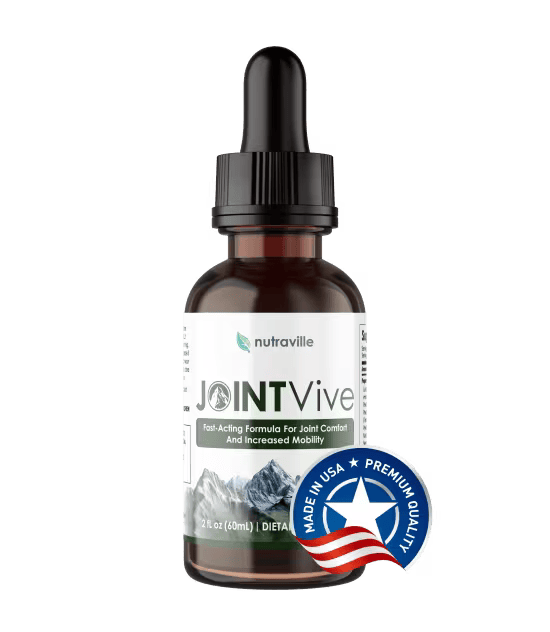
JointVive's formula is nine botanical extracts in a liquid dropper. Unlike the best joint supplements, it hides the amount of each one inside a single proprietary blend. Here's an honest, ingredient-by-ingredient look at what's in the bottle and what the evidence actually supports.
The proprietary-blend problem comes first
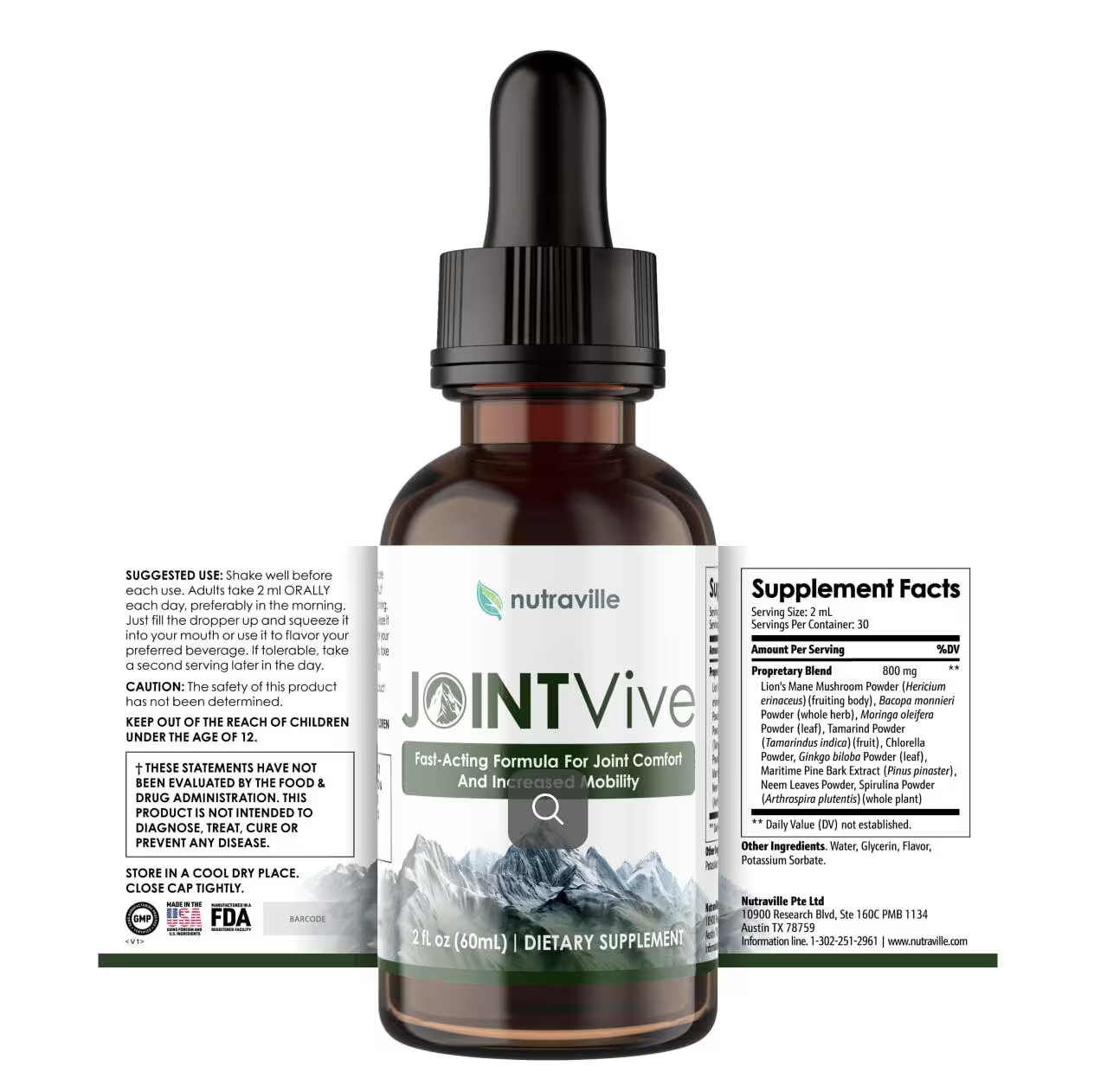
Before the individual ingredients, the most important fact about JointVive's label: the nine actives are bundled into one "Proprietary Blend, 800 mg." The label shows the blend's total weight but not how much of each ingredient it contains. Spread across nine ingredients, 800 mg averages under 90 mg each, and because the split isn't disclosed, any one of them could be a research-grade dose or a trace "fairy-dusted" amount included mainly to appear on the label. Keep that in mind for every ingredient below: the evidence may be real, but whether JointVive contains an effective amount of it is unknowable.
The full formula at a glance
| Ingredient | Dose | Primary role | Joint evidence |
|---|---|---|---|
| Maritime Pine Bark (Pinus pinaster) | Undisclosed | Antioxidant, anti-inflammatory | Moderate |
| Spirulina (Arthrospira platensis) | Undisclosed | Anti-inflammatory algae | Limited–moderate |
| Tamarind (Tamarindus indica) | Undisclosed | Polyphenols; antioxidant | Limited |
| Moringa (Moringa oleifera) | Undisclosed | Nutrient-dense antioxidant | Limited (mostly preclinical) |
| Lion's Mane (Hericium erinaceus) | Undisclosed | Antioxidant; nerve support | Weak (for joints) |
| Ginkgo Biloba (leaf) | Undisclosed | Antioxidant, circulation | Weak (for joints) |
| Bacopa Monnieri (whole herb) | Undisclosed | Adaptogen, antioxidant | Weak (for joints) |
| Chlorella | Undisclosed | Antioxidant algae | Weak (for joints) |
| Neem (leaf) | Undisclosed | Traditional anti-inflammatory | Weak (for joints) |
1. Maritime Pine Bark, the strongest pick
What it is: An antioxidant extract from French maritime pine (Pinus pinaster), the same plant family as the well-known Pycnogenol®. It's one of the more researched plant antioxidants for joints.
The evidence: Several studies link maritime pine bark to reduced inflammation and improved osteoarthritis symptoms, typically at doses around 100 mg or more per day. It's the most credible joint ingredient in JointVive, if there's enough of it in the blend, which the label won't tell us.
2. Spirulina, promising, but dose-hungry
What it is: A blue-green algae rich in the anti-inflammatory pigment phycocyanin.
The evidence: Spirulina has anti-inflammatory and antioxidant data, including some for joint comfort. The complication is that spirulina trials often use doses measured in grams, far more than could fit in an 800 mg blend shared with eight other ingredients. So while the ingredient is legitimate, the amount here is almost certainly modest.
3. Tamarind, the "fluoride" ingredient
What it is: A polyphenol-rich tropical fruit. JointVive's marketing leans heavily on tamarind because of studies showing it can help the body excrete fluoride.
The evidence: There is some research on tamarind for fluoride excretion, and a little on tamarind seed extract for osteoarthritis. But this is also where the sales pitch overreaches: framing tamarind as a fluoride "detox" that reverses joint damage goes well beyond what the evidence shows. Treat it as a reasonable antioxidant, not a cure.
4. Moringa, nutrient-dense, early evidence
What it is: A nutrient-packed leaf (Moringa oleifera) with antioxidant compounds.
The evidence: Moringa shows anti-inflammatory and joint-protective effects in mostly preclinical (animal/lab) studies, with limited human data for joints specifically. Promising as a wellness ingredient; early as a joint treatment.
5–9. The supporting cast: lion's mane, ginkgo, bacopa, chlorella & neem
The remaining five ingredients round out the formula but have weaker evidence for joint health specifically:
- Lion's mane is mainly studied for nerve and cognitive support, with some general anti-inflammatory data, not a classic joint ingredient.
- Ginkgo biloba is an antioxidant best known for circulation; it also has blood-thinning effects worth knowing about (see our safety page).
- Bacopa monnieri is an adaptogen studied largely for memory, included here for its antioxidant profile.
- Chlorella is a green algae marketed for "detox" and antioxidant support, with little direct joint evidence.
- Neem is a traditional anti-inflammatory botanical; JointVive's materials cite it for fluoride removal, but human joint data is limited.
None of these are harmful at sensible amounts, but together they read more like a broad antioxidant "kitchen sink" than a focused, joint-targeted formula.
So, is the formula well-designed?
Partly. There are a couple of genuinely sensible joint ingredients here (maritime pine bark especially), and the botanicals are real, not invented. But the formula mixes a few evidence-backed actives with several general-wellness antioxidants, and then hides every dose in a proprietary blend, so you can't confirm the good ingredients are present in amounts that actually do anything. It's not a bad list. It's an unverifiable one.
For the complete picture, see our main JointVive review, the side effects & safety breakdown, and current pricing.
See JointVive on the Official Site 365-day money-back guarantee
Statements about this product have not been evaluated by the Food and Drug Administration. JointVive is not intended to diagnose, treat, cure, or prevent any disease. Always consult a qualified healthcare provider before starting a new supplement.